
Ottawa launched a $1.5 billion fund in September to help community housing providers buy rental buildings before their affordability disappears. In Vancouver’s Downtown Eastside, tenant organizers had spent the summer asking governments to help buy financially troubled residential hotels. The new fund’s rules exclude single-room occupancy properties, the SROs where low-income residents often share kitchens or bathrooms. Rooming houses are excluded as well. B.C.’s rental-protection fund also leaves SROs out.
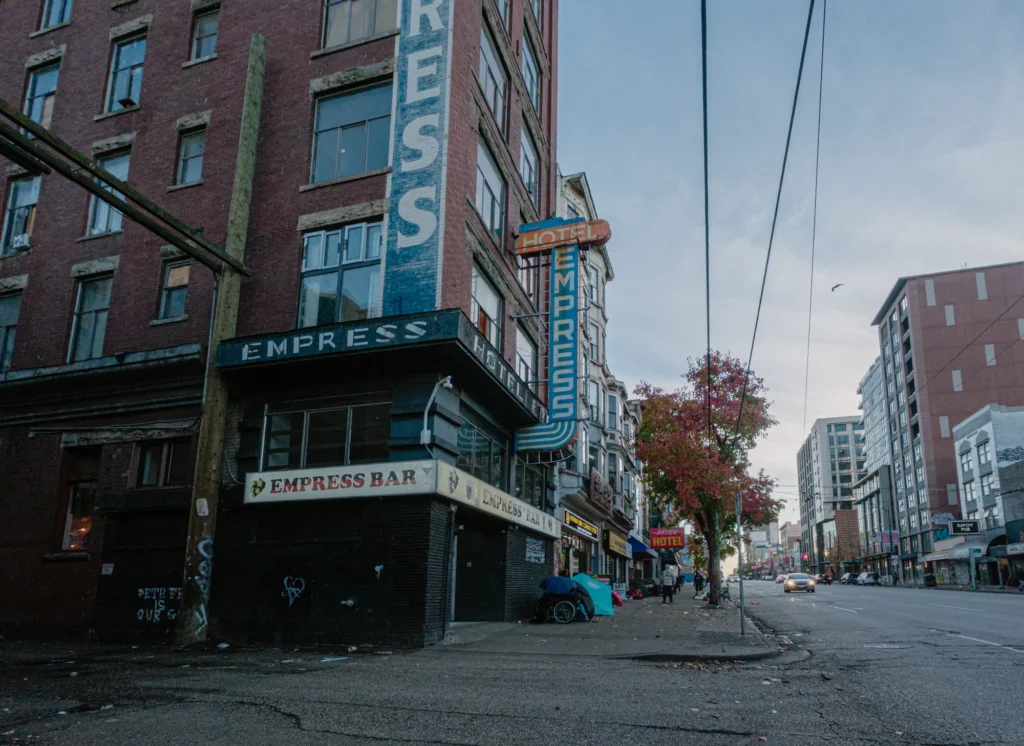
The local warning concerned nine buildings with 483 rooms. The Downtown Eastside SRO Collaborative estimated that about 400 tenants were at risk as properties faced foreclosure, receivership or changes in ownership, Kenneth Chan reported for Daily Hive in July. The list included the West Hotel, United Rooms and Empress, together accounting for 218 rooms. At the West, the Collaborative said 57 of the building’s 98 rooms were already vacant.
The July warning covered buildings in different circumstances, including completed ownership changes and the possibility of future foreclosure. It put pressure on a question that extends beyond the next sale: how a community buyer could acquire an old hotel, keep its rents low and pay for the work needed to keep it habitable. One local land trust has managed a purchase. Its path ran through a rejected City grant, private donors and a repair bill approaching $1 million.
What the funds are built to buy
The federal investment rules describe a purchase that must remain financially viable after ownership changes. An eligible building has at least five self-contained units, is already operating as rental housing and can run without ongoing operating funding. The Canadian Housing Acquisition Fund, the independent organization deploying federal funds, can combine repayable and forgivable loans, typically alongside a commercial mortgage. Some of the money returns through repayment and refinancing, allowing for another purchase later.
That structure makes the acquired building’s income part of the next rescue. Keeping rents affordable must coexist with paying expenses and servicing debt. Capital renewal can be funded in eligible acquisitions; the purchaser must still start with an eligible building. The published exclusions include SROs, rooming houses and fully vacant properties.
B.C.’s Rental Protection Fund similarly requires self-contained units, excludes SROs and expects buyers to obtain mortgage financing to the greatest extent possible. The province’s explanation predates this summer’s warnings. Asked in the legislature in May 2024 why SROs were left out, then-housing minister Ravi Kahlon pointed to the rents available to sustain a purchase. Compared with the income needed to make the fund’s transactions viable, he said, SRO rents made buying them difficult.
The City’s own work describes the strain on buildings with low rents and high upkeep costs. In interviews summarized in its November 2025 SRO framework, eight private landlords reported rising insurance and repair costs and difficulty renewing mortgages. Some described turning to alternative lenders charging up to 20 per cent.
Keeping a room and keeping a home
At the Empress, remaining in place meant preserving an arrangement built around the needs of two older residents. Jen St. Denis reported for The Tyee in August that Guy Lawson, Marlene McArthur’s caregiver, had adapted their room with a loft bed for himself, a small kitchen and a bathroom suited to McArthur’s mobility needs. McArthur said elevator outages lasting days had caused her to miss medical appointments. They had lived there since 2017, after losing an apartment in Surrey to a renoviction.
St. Denis’s examination of title and corporate records showed that the Empress, West and United Rooms had transferred from Christopher Wall to Antonietta and Mario Laudisio in February. Lawson and McArthur had not received a buyout offer, although they described neighbours receiving them.
Vancouver faces a substantial financial deterrent to removing protected rooms, but the decision begins with a particular municipal decision. The City can impose a $300,000 replacement charge per room as a condition of a conversion or demolition permit when a designated room is removed and the owner does not replace it. In a June 2025 memo about the West and Empress, staff explained that vacancy alone did not require that permit. An empty room therefore did not give the City grounds to collect the charge.
Separate rules limit rent increases between tenants in designated, non-government-owned SROs. These vacancy controls mean that an owner cannot simply replace a departing tenant with someone who pays any rent the market will bear. They also require enforcement. In its October 2025 report, City staff recorded reductions in rents for 78 rooms across 17 buildings, averaging $183 per month. Staff reviewed rent rolls and supporting tenancy records to check compliance.
An ordinary sale does not automatically end a tenancy. Foreclosure can bring the question of possession before a court, where the requested order and the tenant’s participation matter. The provincial tenancy law requires a tenant to have been a party before a foreclosure possession order can be enforced against them. For someone receiving court papers, preserving a home can require navigating proceedings about a debt they did not incur.
When the mortgage comes due
The Avalon Hotel on West Pender shows why the debt needs closer examination than a general account of rising interest rates. Howard Chai’s April reporting traced the building’s financial trouble through court documents. The seller-financing loan described in the petition carried interest of three per cent. Its principal became due in February 2025. The lender alleged that the borrowers could not repay it and subsequently failed to comply with an agreement delaying enforcement.
The petition also alleged that unpaid heating bills had led to the building’s heat being disconnected on October 1, 2025. The debt dispute had reached a service included in residents’ accommodation. In March, the B.C. Supreme Court appointed BDO as receiver-manager and ordered payment of approximately $8.61 million to the petitioner, with further interest and costs.
The receivership order authorized the management and operation of the business, as well as the marketing of the property. Receivership put someone accountable to the court in control of those decisions. The order included provision for continuing services required by the receiver, provided the receiver paid the charges incurred after its appointment.
The City’s financial modelling helps explain why allowing higher rents cannot be assumed to resolve such trouble. Using assumed operating costs and limited debt information, staff compared six building profiles under vacancy-control and unrestricted-rent scenarios. They identified operating costs and borrowing as the main determinants of viability. Some profiles remained financially unviable even with unrestricted rents.
A purchase assembled another way
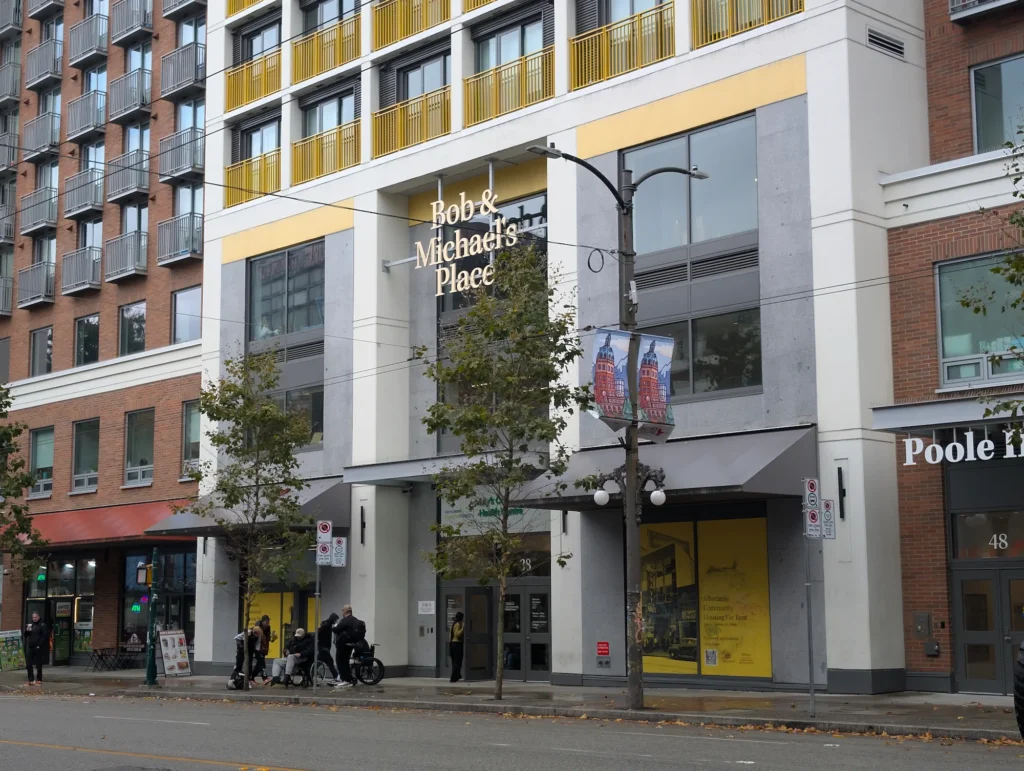
The Downtown Eastside Community Land Trust’s purchase of Powell Rooms brought 23 rooms into community ownership in December 2025. By the following February, City staff recorded rents ranging from $411 to $533. The trust had acquired existing tenancies along with the property at 556 Powell Street.
The purchase followed a rejection at City Hall. In November 2025, staff had recommended a $1 million acquisition grant to the land trust, with requirements for an appraisal, a sustainable financial plan and a registered housing agreement. The recorded vote defeated the grant, with Ken Sim and six councillors opposed. Council received the broader SRO revitalization framework and directed staff to continue pursuing senior government partnerships and funding.
Frances Bula reported in BCBusiness in April that private donors supplied the million dollars needed for the Powell purchase. Her account also described the province’s caution about the young land trust’s organizational capacity. Earlier reporting by Nate Lewis for Vancity Lookout identified a $1 million contribution through Reaching Home as part of the financing assembled for the project. That federal support came through a separate program from the newly launched rental-protection fund.
Buying the building did not finish the work. A March City report proposed $230,000 towards an approximately $1 million renovation, including structural work and plumbing, mechanical and electrical upgrades. Tenants were to remain while the work proceeded. Council approved the grant on March 31, subject to permits and a title agreement securing eight rooms at the income-assistance shelter rate for ten years.
The trust also proposes a different relationship with residents. It describes majority-Indigenous board leadership and an Elders and Tenants Advisory Committee. Lewis reported that the committee’s input extended from possible acquisitions to furnishings and bathroom layouts. Executive director Andy Bond told him that many residents did not want or need the intensive support offered in traditional supportive housing. The plan was to retain Powell’s live-in manager and provide lighter assistance through the SRO Collaborative.
Help for buildings that are still occupied
Vancouver has expanded assistance for repairs, including a grant stream for private SRO owners. Its current applicant guide ties funding to regulatory compliance and average rents no higher than the City’s SRO average. It also requires the building to be at least 90 per cent occupied. The non-profit capital-upgrade stream carries the same occupancy requirement, although the separate program for small tenant-led repairs has different terms.
The 90 per cent rule favours intervention while tenants are still in place. By the Collaborative’s July count, the West was already far below that threshold. This comparison concerns the published eligibility rules; no application or refusal for the West has been established. In a building with extensive vacancies, a prospective buyer must also find the money to repair rooms before they can provide rental income again.
Other assistance funds specific improvements to occupied hotels. On March 31, council approved a separate $500,000 grant for the SRO Collaborative to develop cooling and warming rooms in six private buildings. Those shared spaces address the danger of extreme temperatures for residents living in small rooms, some of them without effective ways to cool down.
Before the next sale
Toronto has built rooming-house acquisition into a municipal program. Its Multi-Unit Residential Acquisition program pre-qualifies community housing providers and provides conditional funding commitments, including money for deposits and pre-acquisition work. Rooming houses are eligible for contributions of up to $150,000 per dwelling room towards an acquisition.
Toronto’s affordable dwelling-room rent, currently $873, is considerably above the rents City staff recorded at Powell Rooms, so its model cannot simply be priced into a Vancouver purchase. It does, however, give a qualified buyer access to money before an acquisition closes. The buyer can arrange a deposit and investigate the property with a conditional commitment already in hand.
On West Pender, the Avalon is being marketed with an asking price of $5.2 million. The broker’s listing identifies two ways to increase the building’s returns: leasing vacant commercial space and renovating 15 unoccupied residential units. Colliers advertises “significant upside potential.”

Denise is a long-time advocate for affordable and dignified housing in the Downtown Eastside. Having lived in SROs and volunteered in homeless shelters, she brings a personal understanding of the housing crisis and its impact on the community. Her work reflects years of lived experience, frontline work, and commitment to creating better living conditions for DTES residents.



Leave a Comment