
David Eby and Lorne Doerkson have arrived at the same number: 50 more Crown prosecutors. In an election full of arguments about public safety, the NDP and Conservatives agree that B.C. needs more people bringing cases to court.
Their agreement extends into addiction care. Both would expand the range of treatments that people can be compelled to receive. The Conservatives would end the existing safer-supply approach; the NDP is promising another involuntary-care facility. Emily Lowan’s Greens would expand regulated alternatives to street drugs and voluntary care, and restore decriminalization of personal possession.
Voters are choosing how much authority to give the state over people who use drugs. In the Downtown Eastside, that choice also concerns the services people rely on now and what care would be available when new powers are exercised. Ending a programme and opening its replacement are separate decisions. The interval between them belongs in this election as much as the argument over which approach is right.
Fifty prosecutors cannot admit someone to treatment
The Conservatives’ public-safety plan would add police and seek Ottawa’s help funding 20 more trial judges. The NDP would make its repeat-violent-offender and chronic-property-offender initiatives permanent and double their funding, alongside additional prosecutors. These are commitments to increase the justice system’s capacity. People affected by violence or theft have reason to want that system to function.
But the work has limits. Provincial Crowns handle most Criminal Code prosecutions; federal prosecutors handle most offences under the Controlled Drugs and Substances Act. A larger provincial prosecution service would help with the cases it is responsible for. Its staffing number tells voters little about access to addiction medicine.
Nor do demands for public safety necessarily stop at enforcement. Save Our Streets, the coalition pressing candidates for tougher action, also wants detox facilities and regional, government-operated treatment. Its impatience concerns both the availability of care and the consequences of crime.
That makes treatment capacity part of the public-safety argument itself. A promise to move people into care creates an obligation to say where they would go, who would treat them, and how long the service would take to become available. The answer has to survive beyond the arrest or referral.
Four years to full funding
The Conservative platform promises “Help, not waiting lists.” It puts treatment and recovery at $95 million a year at full cost. Its fiscal table begins with $10 million in 2027–28, rising to $43 million and then $71 million in the following two years. Full spending arrives in 2030–31. These figures describe new spending.
Phasing in a programme can be sensible. Staff and services take time to assemble. But about a tenth of that eventual annual addition is budgeted for the first full year. The promise to end safer supply needs a first-year treatment plan to go with it.
Eby’s Oliver commitment has a different shape: up to $90 million to establish involuntary care at the Okanagan Correctional Centre for people with severe concurrent conditions, including complex brain injuries. The announcement supplies neither a bed count nor an opening date. It does not explain how the ceiling divides between establishing the service and running it.
The Green platform estimates $50 million annually for its toxic-drugs programme, with separate mental-health and housing lines of $201 million and $1.8 billion. Those broader commitments matter to its proposed approach, but adding them together would yield a misleading total for addiction treatment.
A facility ceiling cannot be compared directly with an annual programme budget. None of these figures gives voters a reliable cost per treatment place. Eby’s announcement leaves the number of places unspecified; Lowan’s allocation leaves the scale of individual services unexplained. Doerkson’s larger eventual treatment figure comes with an explicit wait for full funding.
Some care is already getting faster
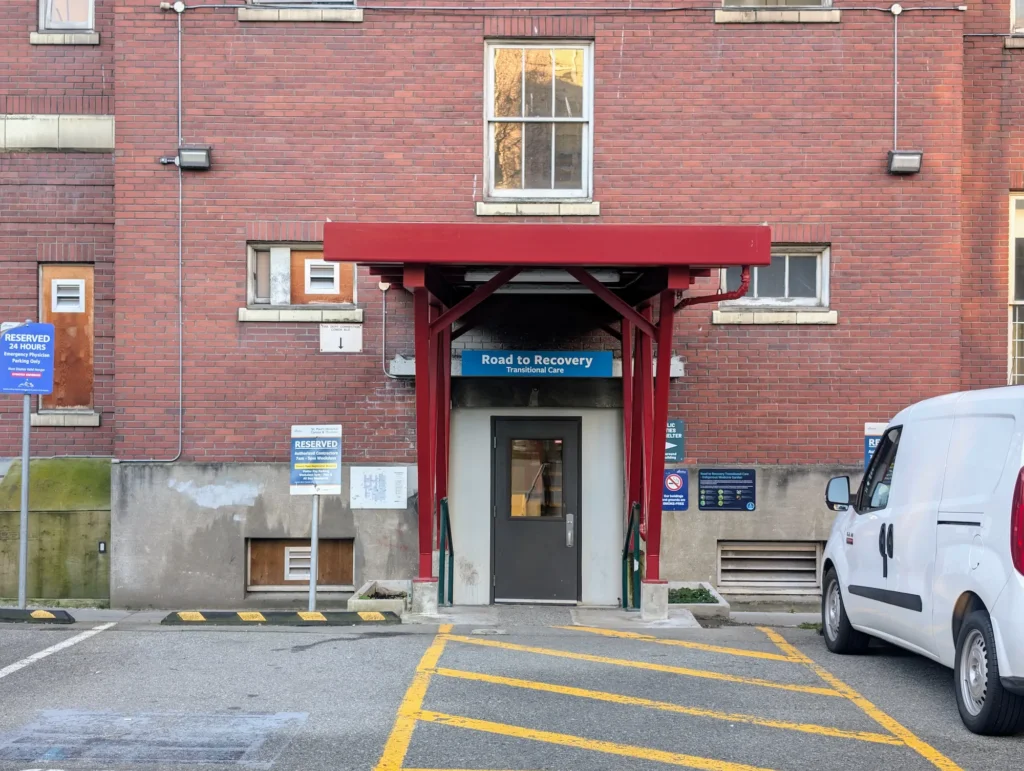
The NDP can point to services beyond its newest secure-care announcement. In February, the province reported that Vancouver’s Road to Recovery programme had brought the median withdrawal-management wait for people prioritised as urgent to one day. Routine waits had fallen from an average of 26 days to approximately eight. Those are government-reported results, covering the period from October 2023 through December 2025.
An urgent-case median is no guarantee for everyone. Neither is a same-day clinical assessment the same thing as immediate admission. Still, these results complicate any campaign account in which voluntary treatment is simply unavailable until a different government arrives. They also give voters a more useful measure of progress than an undifferentiated count of beds.
Withdrawal management, residential recovery and secure psychiatric care do different work. A bed added to one category cannot automatically receive someone who needs another. The Greens’ promise to match investment in bed-based care with outpatient services addresses that distinction. So does the Conservative commitment to support people after treatment with care and housing plans. Their delivery would need to be judged on more than the number admitted.
The government’s existing specialist projects show how long new capacity can take. Its July announcement anticipated the first 24 beds at Prince George in December 2027, with the remaining places by the end of 2028. Surrey’s separate 60-bed facility was expected in spring 2028. Those dates put the urgency of this campaign beside the government’s own construction timetable.
Oliver’s missing opening date matters in that company. A promise of another facility cannot tell a family when an appropriate place will become available.
Compulsion still needs a clinical answer
Families watching someone become unable to recognise their need for treatment have a substantial argument for intervention. The B.C. Schizophrenia Society supports carefully applied involuntary treatment for severe mental illness and argues that some people’s illness prevents them from understanding how unwell they are. That is a case about capacity and access to treatment. It deserves more consideration than a campaign slogan allows.
Former patients also complicate a simple verdict. In a B.C. qualitative study of involuntary psychiatric care published in June, some were grateful for treatment they believed they would not have accepted voluntarily. The accounts were predominantly difficult, including distress and fear that discouraged later help-seeking. Its small sample cannot establish how common those experiences are across B.C.
Eligibility would also determine what each government was promising to provide. The NDP’s description of a specialist population at Oliver and the Conservatives’ broader mandatory-care proposal need to be assessed against the people each would admit. Calling both policies “involuntary care” does not establish identical eligibility or treatment.
The McMaster Health Forum’s research synthesis found mixed results across compulsory-treatment models. Some mandated programmes improved completion, while evidence on substance use and relapse was inconsistent; the research also identified harms after discharge. The studies covered different legal systems and forms of care. They cannot establish in advance whether a particular new B.C. service would succeed.
They do make completing a stay an inadequate definition of success. A government expanding compulsory care would need to explain what happens after release, including continued treatment and somewhere to live. Otherwise, the campaign’s most forceful intervention ends at discharge.
The Greens would place greater emphasis on voluntary services, including community treatment and housing. That creates its own delivery test: the service has to be available when someone wants it. A voluntary-care commitment loses much of its practical value if its expansion remains several budgets away.
What happens to the services people use now?
The sharpest difference concerns the help available before someone enters residential treatment, or when that treatment is not what they need.
Doerkson’s party promises to end the existing safer-supply approach and expand naloxone. It would also review overdose-prevention and consumption sites with the goal of fewer, better-situated services. The Greens would expand regulated pharmaceutical alternatives and consumption services, including places equipped for inhalation. The NDP’s record includes tightening prescribed-alternatives rules toward witnessed dosing and declining to renew the possession exemption that expired in January.
Prescribed alternatives, overdose response and residential care are distinct interventions. Changing one requires an account of the people using it, including those who would not qualify for a secure facility.
A 2024 BMJ study, using data from 2020–21, found lower overdose and all-cause mortality in the week after opioid-alternative dispensations, compared with matched people who had not received them. It was observational, and could not establish whether recipients consumed or transferred the medication. That is evidence of benefit among recipients that a government ending prescribed alternatives would have to weigh.
Supporters of expansion also have evidence to answer. A 2025 JAMA Health Forum study, using provincial data through 2023, associated the safer-supply and subsequent decriminalization periods with increased opioid hospitalizations. It did not establish a conclusive attributable increase in deaths. Its authors considered a greater willingness to seek medical assistance, as well as diversion, as possible explanations. Their data could not identify the cause of individual admissions or isolate decriminalization from the preceding policy. The recipient study and the provincewide analysis answer different questions; neither settles the whole argument.
The Greens’ proposal would also require federal action on possession rules. Decriminalization changes exposure to criminal penalties; its adoption would not establish the treatment and housing services promised alongside it. Lowan’s party has committed to a broader package. Voters still need to know the order in which its parts would become available.
For the Downtown Eastside, those details concern the treatment options people could actually use. In Nora O’Malley’s reporting for Ha-Shilth-Sa, Cody Hunt of Culture Saves Lives called for investment in mentorship and healthy connections for men and boys. His priorities extend beyond an admission or an overdose response. They concern the support available in the neighbourhood before and after either event.
A site can disappear from the plan
The proposed overdose-prevention service at 900 Helmcken illustrates how a provincial commitment encounters local politics. It was outside the DTES, in the city centre. The province paused it in May and cancelled it in August after opposition from residents, businesses and then-mayor Ken Sim.
Sim welcomed the cancellation and pressed for secure treatment capacity. The First Nations Health Authority objected, warning about the consequences for First Nations people and calling for services across the course of substance-use care. Its chief medical officer, Dr. Nel Wieman, cautioned that a single residential treatment episode would not bring lifelong abstinence for everyone.
Their disagreement concerned what should be available locally while treatment capacity grew. Announcing a preferred alternative did not settle that question. A future government promising either more consumption services or differently located ones would face the work of securing a location and making the service operational.
The first year after the vote
Alberta’s compulsory-care expansion offers a useful measure of the time involved. Its government plans interim capacity in existing facilities in 2027; dedicated centres are intended to open in early 2030. Its plan starts with existing wards while construction continues.
Eby has yet to attach an opening date to Oliver. Lowan’s expansion needs a funded sequence of services and locations. Doerkson proposes withdrawing an existing approach while new treatment spending builds over several years.
Before ending safer supply, what care would Doerkson have operating for the people affected, and would they be able to use it?

Glenn is dedicated to scrutinizing government actions affecting the Downtown Eastside and holding those in power accountable for their commitments. With a focus on transparency and policy analysis, his writing aims to expose gaps between promises and outcomes, pushing for meaningful changes that benefit the community.




Leave a Comment