

Lorne Doerkson’s Conservatives have won a majority in B.C. Elections BC’s preliminary count on Sunday showed the Conservatives leading in 64 of the legislature’s 93 seats, against 27 for the NDP and two for the Greens. His party campaigned on ending safer supply, stopping illegal drug use in publicly funded shelters and supportive housing, and expanding mandatory treatment.
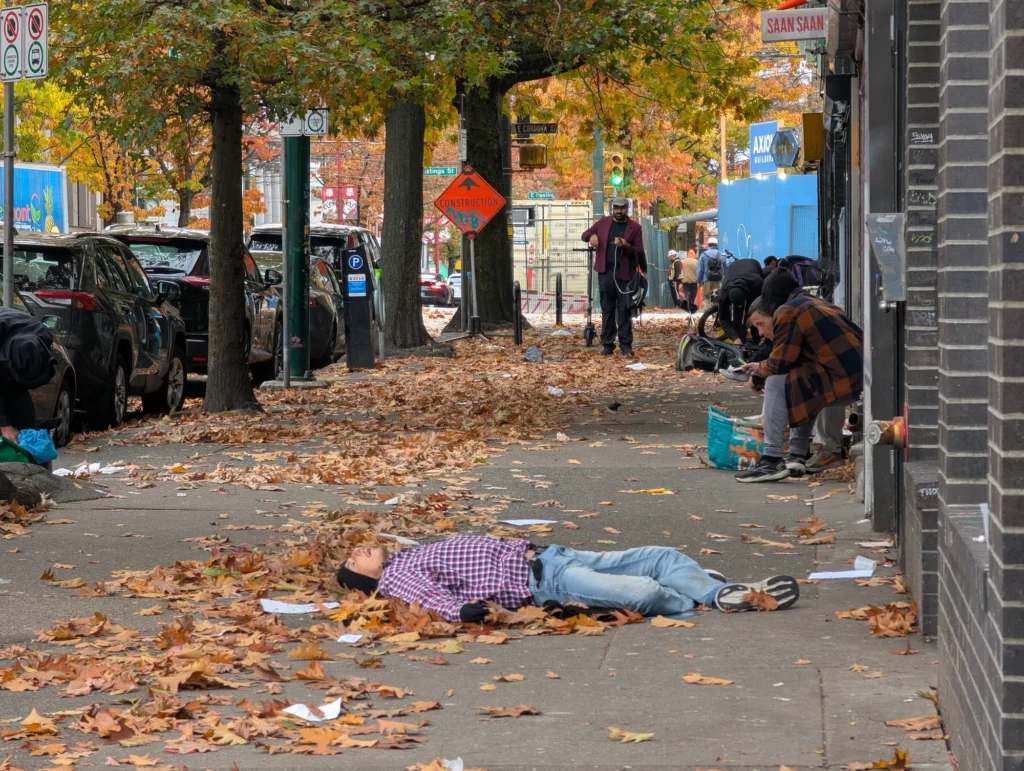
The Downtown Eastside will feel those choices in places more intimate than the legislature: at a pharmacy counter, in a rented room, during a conversation about whether someone is ready for help. Doerkson inherits services already working to get people into recovery, alongside laws that give the state considerable authority over their lives. His government will have to decide which parts of that inheritance it intends to use.
The programme Doerkson would end
The Conservatives promise to end prescribed alternatives, often referred to as “safer supply”. The programme provides regulated medications to people at high risk from the unregulated drug supply. The B.C. Centre on Substance Use describes its principal purpose as reducing the risk of poisoning, distinct from treating a substance-use disorder.
The programme Doerkson would inherit had already been restricted by the NDP. Witnessed-dosing requirements took effect last December, with limited exemptions for exceptional circumstances. The policy requires a health professional to supervise consumption when medication is dispensed. It was intended to address diversion while retaining patient access.
Separately, the NDP allowed B.C.’s decriminalization exemption to expire in January. Doerkson’s change of direction follows changes Eby had already made.
Ending the programme would require decisions about prescriptions people already receive. The Conservative commitment leaves those arrangements unexplained. Its promised expansion of treatment does not say how a patient currently receiving medication would reach a different service.
The First Nations Health Authority argued for a range of services when it opposed the cancellation of the Helmcken overdose-prevention site in an August statement. Its position includes harm reduction and culturally grounded healing. The available options matter to people at different stages of recovery, including those continuing to use drugs. Housing brings that question into someone’s home.
A home in which to stay sober
Jeremiah Myerscough moved into Nanaimo’s Newcastle Place supportive housing about a month into sobriety. In June, he told city councillors about “how incredibly difficult it is to recover from substance abuse in a wet housing environment.” Encounters with people drinking, and conversations about past substance use, made staying sober harder, he said.
In Mick Sweetman’s reporting for The Discourse, Myerscough described counselling, volunteering and exercise, while spending as little time at the building as possible. His account makes it difficult to dismiss the desire for a sober home. A person can need supportive housing and want protection from substance use within it.
At the same meeting, addictions physician Roger Walmsley supported recovery-oriented housing for selected residents. He argued for allowing opioid agonist treatment, including methadone, and warned against evicting someone for a relapse. A no-use rule needs to explain what happens when a resident resumes using.
Myerscough wanted accommodation suited to his recovery. The Conservative pledge is narrower than abstinence from every substance: it targets illegal drug use. It would reach across publicly funded supportive housing, including homes occupied by people who continue to use those drugs. The party would change the conditions within those buildings and offer a different approach to treatment.
The Safe Streets commitment promises to stop illegal drug use in those homes, shelters and hospitals to protect residents and staff. It leaves the response to a breach unexplained. A referral would require a treatment service that can accept the person. If the government instead makes continued accommodation conditional on compliance, someone who keeps using could face losing their place. The party has yet to specify which consequences it intends.
The existing housing system has been built to accommodate people with a range of needs. BC Housing describes supportive housing as a home with on-site, non-clinical assistance, including connections to health and substance-use services. Its explanatory material includes harm reduction as one of providers’ approaches. Staff helping a tenant keep a room are doing a different job from clinicians admitting a patient to a secure facility.
The NDP also changed the rules governing those homes. A supportive-housing regulation introduced in July sets out changes to tenancy agreements and provisions taking effect in December, alongside further rules on entry and weapons. Those changes will be part of Doerkson’s inheritance. They are separate from his party’s drug-use pledge.
The regulation retains procedures for ending a tenancy. A campaign declaration does not replace them. Shelter beds and rooms in single-room-occupancy hotels can have different legal protections. Before the Conservatives can make a no-use promise mean the same thing across those settings, they will have to decide how it fits the accommodation people actually occupy.
For a tenant seeking sobriety, a better living environment could be a welcome change. For a tenant continuing to use drugs, enforcement could determine whether they remain indoors. Sending that person to treatment would require a further decision, made under a different law.
Holding someone and treating them
Police in B.C. already have powers to intervene in a mental-health crisis. Under the Mental Health Act, an officer can take someone for examination when the statutory conditions are met, including apparent mental disorder and behaviour likely to endanger that person or others. Involuntary admission then requires clinical assessment against further criteria.
Doerkson’s party proposes amending the Act to connect people with mandatory treatment. Its plans meet a constitutional problem with what happens after admission. In a July judgment on psychiatric treatment consent, Justice Lauren Blake distinguished the need for an involuntary-admission system from the constitutionality of B.C.’s approach to treating patients without consent.
The case was brought by the Council of Canadians with Disabilities. The court’s declarations concerned forced psychiatric treatment and exclusions from consent protections. Blake suspended those declarations for six months to allow a legislative response, with an extension application possible on evidence. The judgment was not an abolition of involuntary admission.
It put a difficult distinction into the public debate: someone can meet the conditions for detention and still be capable of making a treatment decision. Deciding that a person needs to be held does not settle every question about what can be done to them.
For families, that distinction can carry a different fear. In an August commentary, BC Schizophrenia Society president Jack Middleton argued that reform must preserve access to effective involuntary treatment. He warned that a replacement system allowing treatment to be refused could leave people detained without the care needed to allow their release.
Health Justice, which intervened in the case, argues for capacity assessments and protection for patients’ treatment choices. Both organisations want the law changed. Their positions differ on whether a patient’s wishes should govern treatment while the person is detained.
The NDP had already committed B.C. to a larger involuntary-care system. The Conservatives’ victory gives a different government responsibility for its direction. It does not relieve that government of the work of defining the powers it wants, the patients they apply to, and the consent rules governing their care.
The service also has to fit the patient. A person requiring specialized psychiatric care and someone asking for detox do not necessarily need the same bed. A larger secure-care system would still leave work for the people arranging voluntary care on East Hastings.
Surrey’s beds and Woodward’s recruits
Some of the facilities Doerkson will inherit have moved beyond the announcement stage. In September, the Province said construction had begun on a 60-bed Surrey facility for people with complex mental-health and substance-use needs, including involuntary admission capacity. The approved project budget was up to $57 million, with opening anticipated in spring 2028.
The Surrey facility is intended for the Fraser Health region, rather than providing a reserved allocation for the DTES. It is one of the projects a Conservative minister will take over, with money approved and an opening date attached.
Budget 2026 also included $131 million over three years for intensive mental-health and addictions services, including community teams and specialized beds. The new administration will have to make decisions about that existing investment alongside its own additions. It is taking over the budget and proposing another one.
The same is true of policing. The VPD’s academy opened at Woodward’s in September, with 40 recruits beginning training at 351 Abbott Street. Their scheduled start as working officers is June 25, 2027. Training within the neighbourhood is already underway, while deployment is scheduled for later.
The Justice Institute of British Columbia separately announced a capacity of up to 432 municipal police recruits annually, effective May. The Conservative recruitment pledge will build on that expansion: 250 additional police recruits and 500 RCMP positions across B.C., with the RCMP expansion directed towards rural and regional communities. How many additional officers reach the DTES will depend on deployment decisions, not the provincial total alone.
The Conservative fiscal plan sets aside phased additions for treatment and recovery, reaching $95 million annually in 2030–31. Our earlier examination of the treatment timetable describes that schedule. The incoming government will also have to decide how it uses what is already funded and operating while it develops its additions.
Recovery already underway on East Hastings
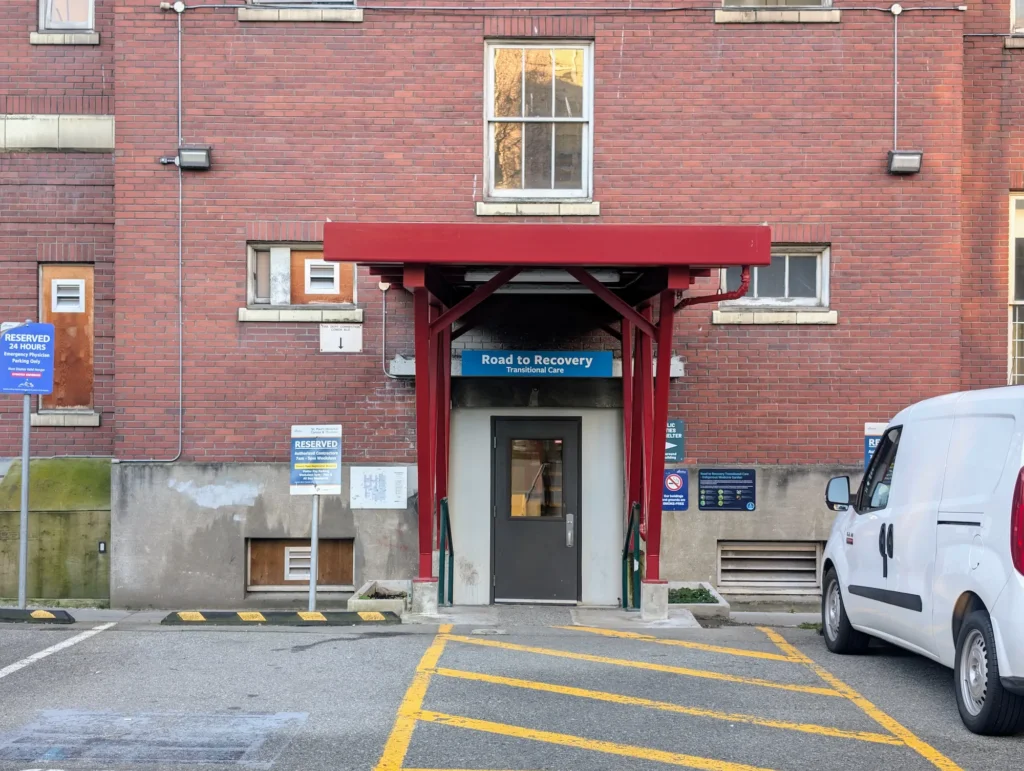
At the Ashtrey Recovery Resource Centre at 450 East Hastings Street, the Overdose Prevention Society is already helping people pursue recovery. People can enter without being sober, executive director Sarah Blyth told The Tyee in June. Someone still using drugs can come through the door and begin talking about stopping.
On September 3, housing minister Christine Boyle confirmed provincial funding for the centre. Her statement described recovery programming alongside housing support and basic facilities. When the NDP later promised consistent funding for the Ashtrey and an additional DTES day centre, it was proposing to strengthen an existing service and create another.
The party attached money to that proposal. Its campaign costing sheet allocated $400,000 to DTES day spaces in 2026–27 and $1.8 million in each of the following two years. The allocation grouped the spending under one line, leaving the division between the centres unspecified. It remained a campaign plan.
An organisation known for overdose prevention is doing recovery work the Conservatives say they want more of. Doerkson’s government will decide whether the NDP’s proposed support becomes policy.
In her June interview, Blyth described the Ashtrey’s dependence on annual provincial grants and said she wanted dedicated funding. That request predates the election. The Conservatives have won the power to answer it.

Glenn is dedicated to scrutinizing government actions affecting the Downtown Eastside and holding those in power accountable for their commitments. With a focus on transparency and policy analysis, his writing aims to expose gaps between promises and outcomes, pushing for meaningful changes that benefit the community.




Leave a Comment