
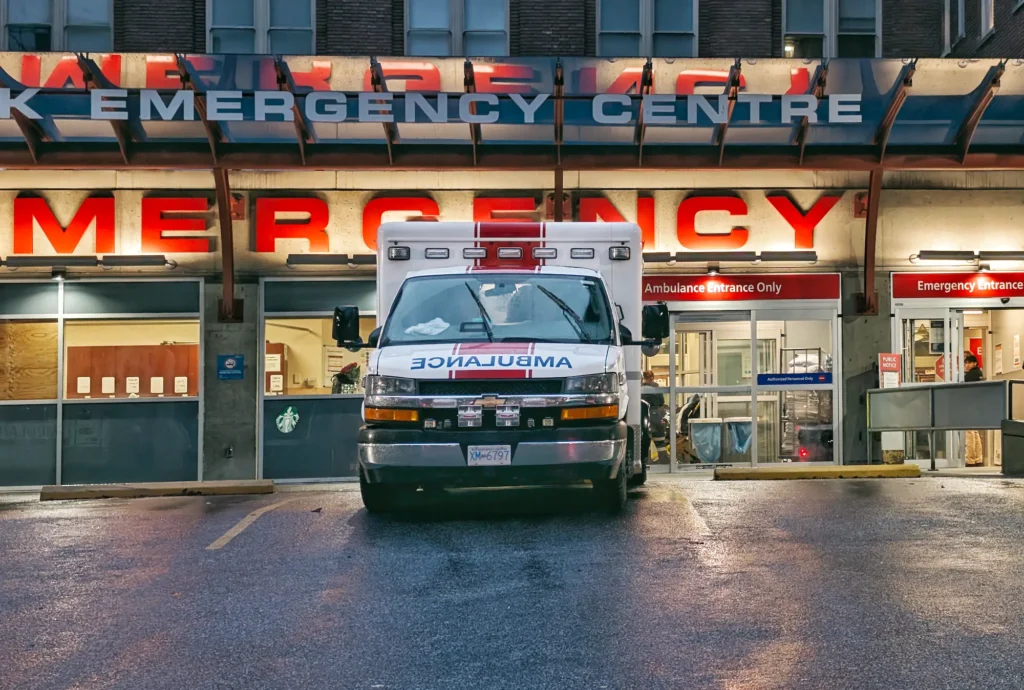
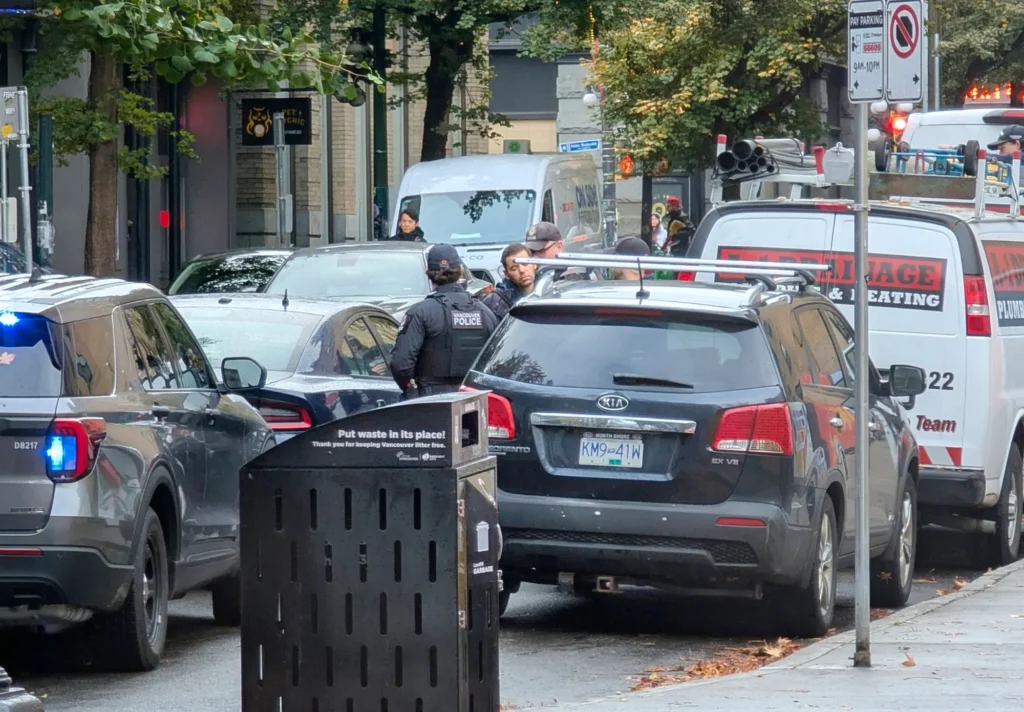
On Tuesday, November 3, just after 11:20 a.m., a paramedic was helping a patient near West Hastings and Abbott streets when a man approached and asked for water. The paramedic kept tending to the patient. The man allegedly struck him on the head and ran. Police arrested a 27-year-old man one block away, and the paramedic suffered minor injuries. Assault charges are being recommended.
The Ministry of Health counts the violence that health-care staff report, and ambulance crews have the highest rate. In its notes for the 2024 budget estimates debate, the ministry recorded 5,315 reported incidents of violence in the province’s health authorities in 2023 and wrote that BC Emergency Health Services, which runs the province’s ambulances, “has the highest incident rate of violence with 9.99 incidents per 100 FTE,” meaning full-time-equivalent staff.
The paramedics’ union says the violence has been climbing, most of all over the last five years. A federal law took effect on July 15, making an assault on an on-duty paramedic an aggravating factor at sentencing, less than four months before this one.
A paramedic tending a patient was struck
The Vancouver Police Department published the account on Thursday, November 5. The same day, BC Emergency Health Services’ chief ambulance officer, Leanne Heppell, told Daily Hive that “there is no circumstance where violence against paramedics, or any healthcare worker, is acceptable,” and that this “does not mean violence should be part of the job.” The service’s immediate focus is the paramedic, colleagues and the team affected. It will review what happened and notify WorkSafeBC, as it does with any incident that could affect employee health and safety.
Ian Tait, communications director for Ambulance Paramedics of BC, relayed in a Global News interview what the union had heard: a paramedic treating a patient was approached by “an unrelated individual,” there was “a discussion,” and then “an unpredictable violent offense.” The paramedic was treated at hospital and released. For the union, it is one more entry in a pattern: violence is “something that we’re seeing more and more in our work.” Tait listed what the union has heard: a very violent assault on two paramedics in Victoria a couple of years ago, patients walking into ambulance stations with knives, an interior station that was shot at a few years ago, and dispatchers who are verbally abused and harassed on the phone day to day.
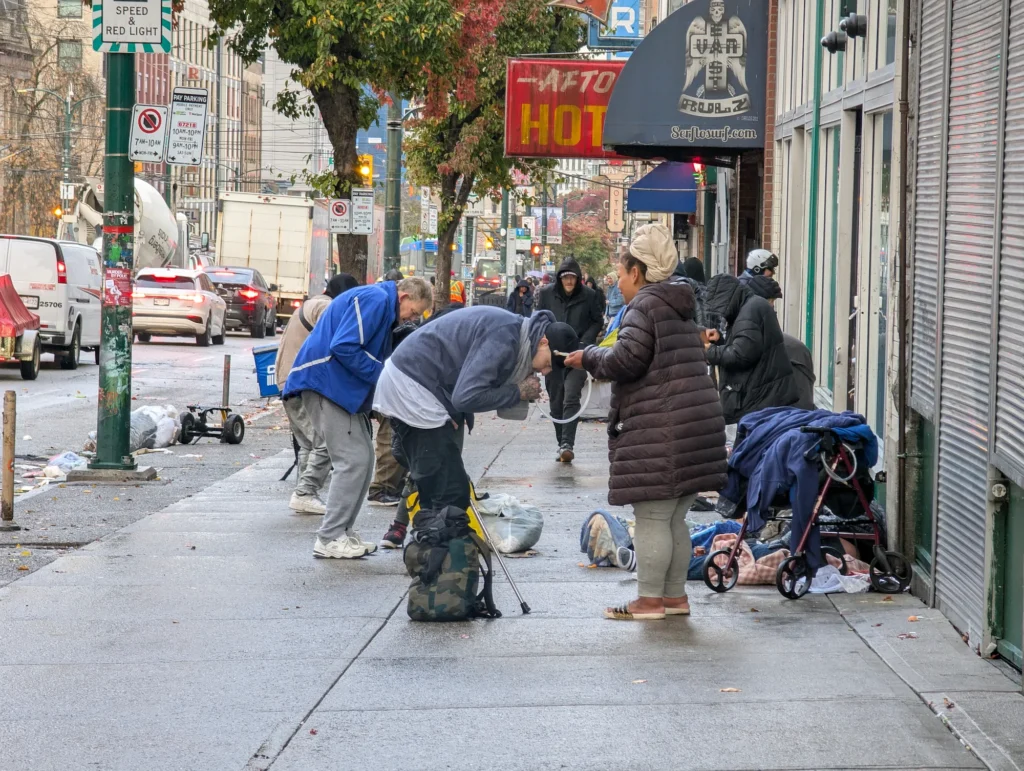
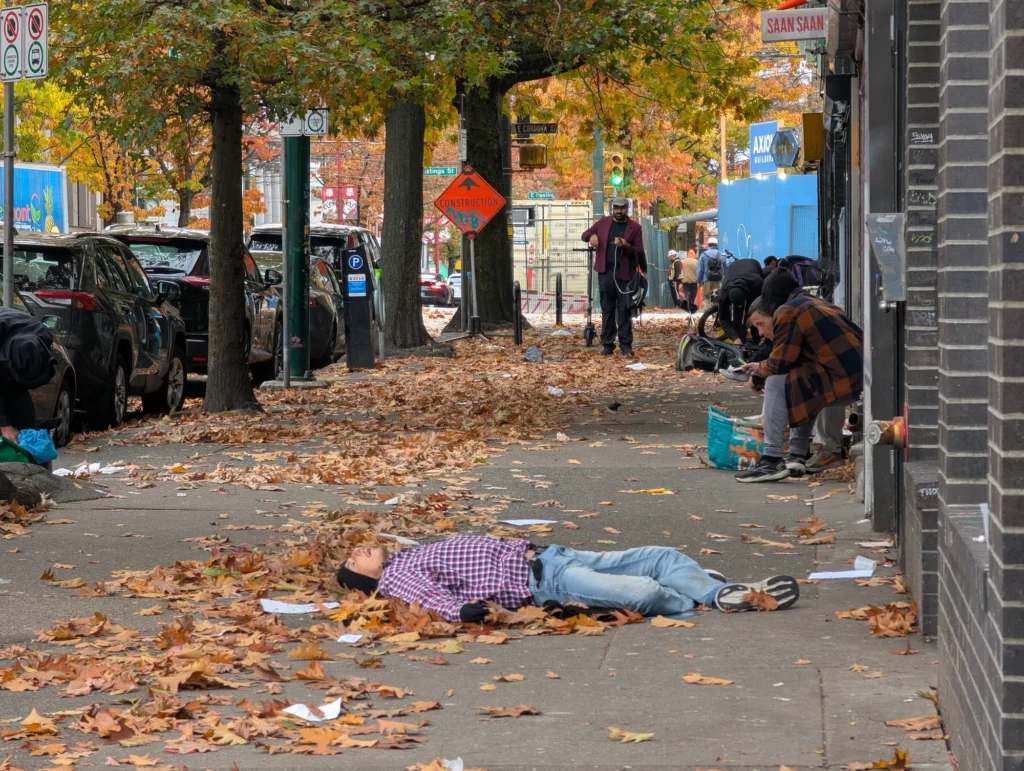
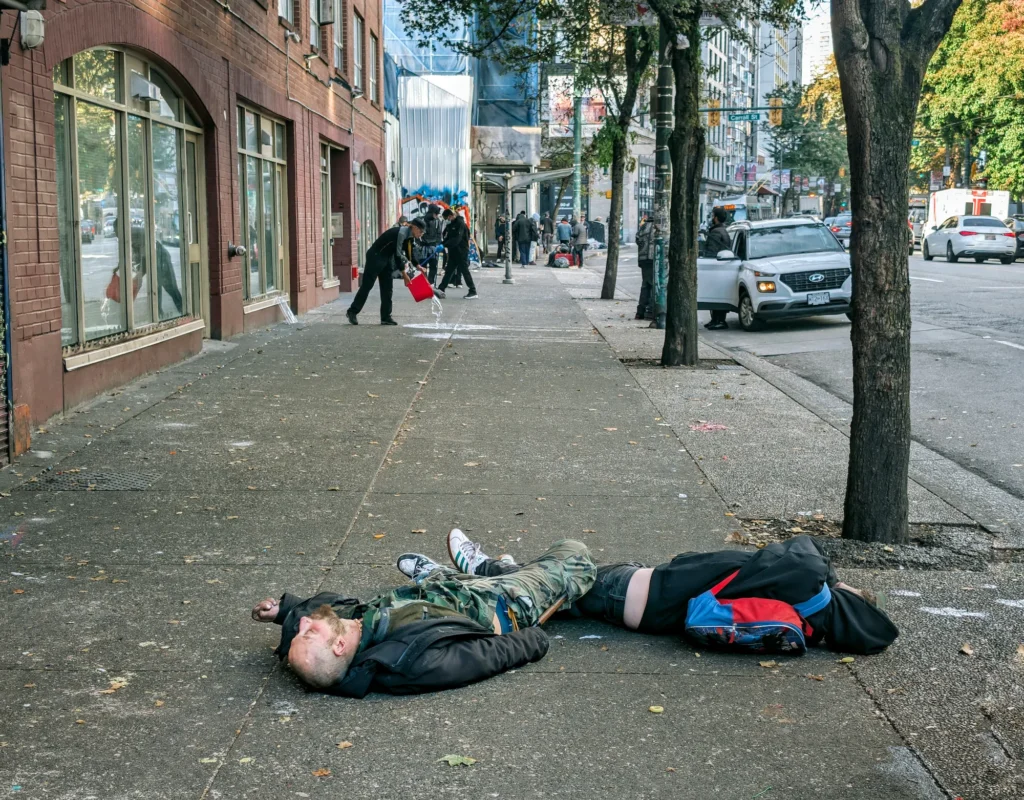
Tait ties it to where paramedics meet people, at “very low points in their lives”: the Downtown Eastside, people who are unhoused, have addictions or are in mental health crisis. “We like to think that this is not who these people are on a regular basis and they’re just suffering. So we try not to judge.”
Four paramedics describe what the work holds
In July 2024, Greg Stubbs, a paramedic on Vancouver Island, and his partner were called to a suspected seizure at an encampment on Pandora Avenue in downtown Victoria. The man in the tent was “nice and compliant” while they assessed him in a chair, Stubbs told Global News. Then the man stood up and “punched me in the face,” and kicked him “as hard as he could in the face.” A bike helmet “took most of it.” Stubbs came away with two black eyes and no fractures. A crowd of about 60 people faced the crews, and police closed a four-block radius around Pandora Avenue.
Jennifer McKnight-Yeates, a primary care paramedic in the Fraser Valley, describes crews that no longer enter homes alone. On a domestic violence call with two severely intoxicated people, a husband grabbed her and kept making sexual advances until they reached the hospital. “You just never know what you’re walking into,” she says.
Candis Visser, a duty supervisor in Metro Vancouver, and her partner were once locked in a room with a man who had assaulted his wife. Police were called, and the two paramedics tried to keep him calm. She now brings a partner along when she is uneasy. “I’m not comfortable leaving my partner in a room with that person,” she said.
Duncan Pelly, a primary care paramedic in Metro Vancouver, was nearly punched in the face by a patient with dementia who had been calm with other responders. Patients have verbally abused and shoved him, and he has watched the violence grow. “I have a family to go home to,” he says. He wants more violence-prevention training.
In February 2025, the union’s provincial safety director, Corey Froese, described what has changed: “the propensity to violence.” Paramedics have dealt with “being shot at, attempted stabbings, sexual assaults.”
A pellet gun, a knife, an ambulance bay
In January 2023, paramedics on a call in the Downtown Eastside were shot at with a pellet gun from a rooming house on Hastings Street. When police arrived, they came under fire as well, Global News reported.
In December 2024, a person holding a knife walked into the ambulance bay of the Kelowna station while a paramedic was washing an ambulance. The paramedic kept the person at a distance until colleagues helped defuse the situation, and no one was hurt, CBC reported. “We need to be able to wash an ambulance without someone being able to walk in with a knife completely unchecked,” Tait said. The ambulance service added security protocols afterward and is weighing longer-term measures, without saying what they are.
On a Sunday evening in October 2025, a paramedic refuelling her ambulance at a Kamloops gas station was punched in the face by a man who walked up to her. The union called the attack unprovoked. She was treated at hospital for injuries it described as not significant, and Kamloops RCMP arrested one person. “It’s even more troubling when our members are victims of violence,” Tait said.
In February 2026, a patient in the ambulance bay at Vancouver General Hospital damaged the inside of a parked ambulance, tried to smash its windows, grabbed needles from a sharps container and, police said, appeared to be trying to start the engine. The paramedics who had brought him in got out unhurt. Police blocked the ambulance with a patrol car and fired a bean-bag round during the arrest. Paramedic public information officer Brian Twaites said the patient “became combative,” that the service notified WorkSafeBC, and that it recorded seven incidents of patients damaging ambulances from 2020 to 2025, most of the damage minor.
Paramedics Say Many Assaults Are Never Reported
The ministry’s rate counts incidents that staff reported. A rate per 100 full-time-equivalent staff lets services of different sizes be set side by side. The union argues that paramedics do not report all of it: its 2022 letter to members called violence “systemically underreported by paramedics in this province.” In 2025 it asked that every incident be recorded through its health and safety system.
In 2023, reports from across the health authorities included 742 associated WorkSafeBC time-loss claims. The ministry’s notes for the 2025 estimates debate give the next year: 6,406 reported incidents of violence in 2024 in the health authorities and Providence Health Care, with 962 time-loss claims. That is 1,089 more incidents, or 17 per cent, than in 2023. Injuries due to violence, the notes say, have increased at an average of 15 per cent a year over the last five years.
WorkSafeBC counts something different from the ministry. Its table of claims by occupation for injury years 2011 to 2020 lists 207 claims for acts of violence or force in the federal occupational group that covers paramedics and ambulance attendants. A claim is a worker’s injury filed with the compensation board. A report is an incident a worker logs with an employer, whether or not anyone is hurt enough to file.
Ontario’s Peel region has published what sits under such a rate. A 2023 study of reports filed with Peel Regional Paramedic Services between February 1, 2021 and January 31, 2023 counted 941 reports of violence from 374 of the service’s 784 paramedics, across 224,739 calls. Verbal abuse was the only type in 39.1 per cent of the reports. Physical assault appeared in 38.7 per cent and sexual assault in 2 per cent. Patients were the source in 78.2 per cent. Eighty-one paramedics were physically harmed, and reports were filed for 0.4 per cent of calls.
The authors call violence against paramedics “vastly underreported” because of “an organizational culture that stigmatizes reporting.” They write that they are working within a culture that “may still consider violence ‘part of the job,'” and that they know of injurious assaults that were never documented. They conclude that their estimates are “likely conservative.”
Paramedics are not the only workers hit
Paramedics are among several frontline workforce groups with published counts. In a May 2024 survey by the BC Nurses’ Union, 59 per cent of Vancouver Coastal Health respondents and 66 per cent of Providence Health Care respondents reported physical violence at least monthly.
In May 2025, Labour Minister Jennifer Whiteside told a Legislature estimates debate that WorkSafeBC allowed 3,611 claims for acts of violence or force in 2024, 3 per cent more than in 2023. Of those, 1,979, or 55 per cent, came from health care and social services: 605 from nurse’s aides, orderlies and patient service associates, 566 from social and community service workers and 504 from nurses. Whiteside gave the comparison with 2020: nurse’s aides, orderlies and patient service associates went from 503 claims to 605, social and community service workers from 386 to 566, and nurses from 497 to 504.
City of Vancouver staff told council in October 2024 that parking enforcement officers faced one assault every two weeks in 2023 “and increasing,” and that park rangers faced two violent incidents a month in the first half of 2024. The slide is titled “Staff Stories of Inappropriate Public Behaviours.”
One public worker’s count moved the other way. Coast Mountain Bus Company recorded 54 assaults on transit operators in 2025, a rate of 0.22 per million boardings, against 56 and 0.23 in 2024, TransLink’s March 2026 board report says, “the lowest assault rate since CMBC’s modern Violence in the Workplace Program began in the early 2000s.”
Escorts, training and a changed sentencing law
After the July 2024 attack on Pandora Avenue, Victoria Police Chief Del Manak called an emergency meeting with the mayor, and fire and ambulance crews stopped responding to the 900 block of Pandora Avenue without a police escort. The city also moved to enforce a ban on tents there and added police foot patrols.
The ministry’s 2025 notes describe the training and the rules paramedics work under. Paramedic violence prevention training includes 10 hours a year: a two- to three-hour online course, followed by seven hours of in-person, hands-on training. Dispatchers screen 911 calls for potential violence and can tell paramedics to “WAIT” until police say a scene is safe. Paramedics also have the authority to request police support, withdraw from an escalating situation or refuse to attend a scene until police clear it. Froese wants the training to go further: “enhanced training for our members to read the signs before an assault can take place.”
On June 15, Bill C-14, the Bail and Sentencing Reform Act, received Royal Assent, and its sentencing provisions took effect on July 15. Judges must now consider whether the victim of an offence was an on-duty firefighter, paramedic, police officer or other first responder, CP24 reported. The November 3 assault came after the law took effect. An earlier attempt, a private member’s bill from Conservative MP Todd Doherty, died on the order paper when Parliament was prorogued.
What paramedics have asked for since 2011
In 2011, Paul Swain’s Royal Roads University study of safety education at the BC Ambulance Service found that staff were asking for new courses on hazard recognition, self-defence, and dealing with psychiatric patients. Two suggestions named the SkyTrain and the Downtown Eastside. The requests on communication and on psychiatric patients came from staff who answered his online survey, and they named those as the areas in which they felt vulnerable.
Tait’s list in the Global interview is close to Swain’s: better safety training, more processes in the dispatch centre, and enough staff and response capacity that paramedics are “rarely alone when they go into some of these scenes.” Some paramedics already work without a partner: supervisors and advanced care paramedics respond alone in SUVs.
No list removes the surprise. “You can show up to a call and everything can be going perfectly fine and be perfectly calm and then in an instant something can change,” is how Tait describes the job. Stubbs’s patient was “nice and compliant” until he was not. What has improved is the early warning: dispatchers and paramedics are better at spotting what is unsafe from farther away.
The paramedic struck on West Hastings on November 3 was treated at the hospital and sent home.
See more of our reporting in Google’s Top Stories.


Monika is a dedicated Downtown Eastside activist and youth counsellor with extensive experience working alongside British Columbia and California community organizations. Passionate about harm reduction and youth empowerment, Monika’s advocacy focuses on creating impactful programs, offering a voice to those often overlooked.


Leave a Comment