
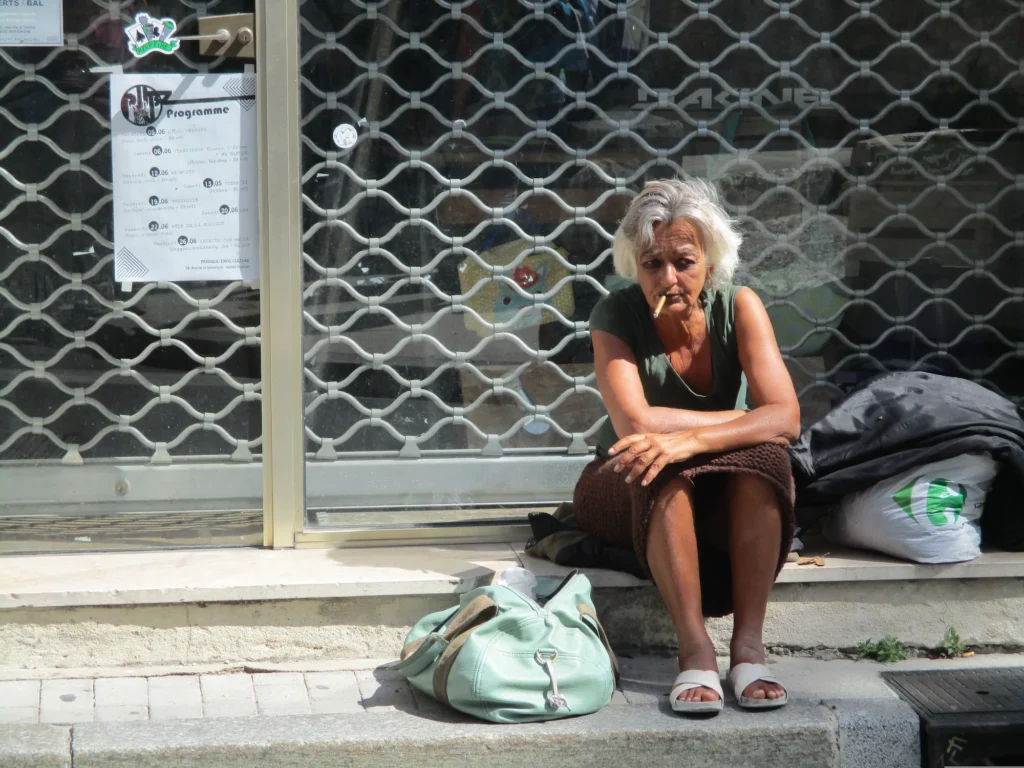
A transition-housing worker answering a provincial census wrote that 17 applications had arrived for a single second-stage vacancy. The same worker counted 34 families at the transition house looking for help and housing, and said the house could take two of them.
Second-stage homes are the door after the first safe bed, and each one opens only when a family walks out of it. In 2018, the Province promised 1,500 spaces of several kinds for women and children leaving violence, and it has since doubled the promise to 3,000 by 2032. On June 30, 2025, it counted 771 open.
Between the first bed and the home that follows sits a wait. The Province publishes numbers for dollars, buildings and openings, and none of them times it, an omission that a report released on November 2 by the Canadian Centre for Policy Alternatives treats as a cost in its own right. The people who have described paying that cost in British Columbia are women who spent months and years in a bed that was supposed to be temporary.
What first on the list means
In April 2025, Global News spoke with a mother who had fled an abusive relationship with two suitcases and her child, and who appears in its report without a name, for her safety. The first-stage bed gave her refuge. The home that was meant to follow took longer: six months in first-stage housing, then more than two years in second-stage. The system she entered was designed on shorter terms, 30 days in the first stage and up to 18 months in the second.
Somewhere in those years, she said, she was told that her situation put her at the top of the list. She could also see women who had been on it for seven or eight years. Her own search for a rental ran through places cheap enough to afford and bad enough to make her cry, with mould she described as everywhere, and through landlords who she said preferred two-parent families to a single mother with a child. Housing Minister Ravi Kahlon agreed that discrimination against vulnerable renters was a concern, called it a human rights issue and pointed to a complaint process.
The province’s main queue for subsidized housing publishes its rules. BC Housing’s Housing Registry sorts applicants into five categories by urgency, puts those fleeing domestic abuse in the second, and lists people within a category in the order they applied. It says demand far exceeds supply and that it is not possible to predict when a unit may become available. An applicant who goes six months without updating the application sees it put on hold, and then cancelled if a mailed card gets no reply. Second category, then first come, first served: that is as precise as the published rule gets.
The staff of the transition houses watched the effect from the other side. Nina Melwani, who manages transition houses at the YWCA, told Global that people were using the maximum time available, that most were staying a year to 18 months, and that the backlog was heavier than in earlier years. Kahlon said the Province would be flexible with women who need to stay longer.
The lease that began in March
Jane, as The Tyee calls her, spent about three years at Victoria Women’s Transition House preparing for the day she would leave. She went back to school for her GED, took university courses, and won a full-year scholarship that was to start that September. With about six months left in her contract, she knew she could pour her energy into either university or the search for a home. She gave up the scholarship. Choosing housing over school, she said, was soul crushing.
On a Sunday in late January, she signed a lease for an apartment she could move into in March. The transition house’s deputy director had told her by email that if she presented a lease before the end of January, the agency was willing to discuss an extension. She could not find anyone from the society on site to show it to before the month ended, and her request went unanswered. She spent the next month homeless, waiting for the lease to begin. In April, a friend still living in the house told her that her old unit had not yet been taken by a new occupant.
Lori, who had lived at Victoria Women’s Transition House for four years, was told by staff late one summer that her time was up, The Tyee reported. She found no hostel beds free, because tourists had filled them for a music festival, and the shelters at Our Place sent her back to the society she had just left. She lived in her car. Jennifer Johnson, evicted days into a stay after a missed curfew, spent months homeless and then moved back in with her abusive partner in order to get housing. Four years on, she said, it had taken her a long time to feel settled in her home.
Deborah Rogers, a spokesperson for the Victoria Women’s Transition House Society, declined to comment on the women’s allegations. She said the society had seen considerable success moving women into housing, that the program is not permanent housing and that each client knows the end date from the first day. She also acknowledged that the community’s lack of affordable housing left everyone with fewer options.
The CCPA’s lens files these accounts under different headings: Jane’s scholarship under employment and education, Lori’s car under housing stability, Johnson’s return to a partner under safety. The Province’s figures count dollars, buildings, and openings.
Spaces counted, queues not
What the Province can say with precision is what it has funded. The Women’s Transition Housing Fund began in 2018 with $734 million over 10 years to build and operate 1,500 spaces. The Homes for People plan adds nearly $1.2 billion to reach 3,000 by 2032. On June 30, 2025, 1,388 spaces were delivered or underway, and 771 of them were open.
The distance between those figures has a history. In March 2023, Kahlon told reporters that 868 spaces were open or underway, and the government then confirmed that 188 were complete. He acknowledged that construction was taking too long and blamed permitting, rezoning and a shortage of labour. BC Liberal housing critic Karin Kirkpatrick charged that the day’s announcements were reannouncements of buildings that had yet to open.
On February 3, 2026, the Province opened what it called the two largest buildings in the history of the Fund. The East Vancouver building has 78 homes, 33 of them second-stage and 45 long-term, run by YWCA BC. The Langley building has 80, with 33 second-stage homes operated by Ishtar Women’s Resource Society and 47 long-term rentals run by YWCA BC. The Province put more than $54 million into one and nearly $50 million into the other.
Julia Davidson, executive director of Ishtar, called the Langley second-stage homes a bridge between the society’s two transition houses and permanent housing, and said Langley now had a full cycle of support. The Province’s release counts homes. It does not say how long the women who move into them waited, or how long the next family will.
One night in November
The BC Society of Transition Houses runs a repeated count of the line itself, and it covers a single day. In its 2025 census, taken November 19 and 20, 80 of the society’s 179 programs answered. They sheltered 1,049 women, children, and youth and could not serve 105 more, 69 of them women. A quarter of the responding transition programs were at or over capacity. The society reported that pets a program could not accommodate had become the second most common reason for turning someone away, at 56 per cent, up from 4.7 per cent a year earlier.
Nineteen programs kept a waitlist, and those lists held 653 people: 535 women, 117 children and youth, and one other dependent. Second-stage programs accounted for 581 of them. One worker put the wait for subsidized housing at two to five years and said families were left without homes while they waited.
A year earlier, the 2024 census had found 1,264 people on lists at 24 programs, 1,152 of them at second stage. Eighty-five programs answered in 2024 and 80 in 2025. The society says its totals likely understate demand, and the 2025 report does not say whether one person can sit on more than one list.
The entrance looks different. On April 30, 2025, British Columbia’s short-term facilities were 63 per cent occupied and 24 per cent of them were full, against 43 per cent full in April 2018. The longest lists, in both census years, sit at second stage.
Across Canada, Women’s Shelters Canada’s 2024 survey of more than 200 shelters and transition houses found the same pattern. Ninety-seven per cent said it had become harder to help survivors find housing, 94 per cent of emergency shelters and 83 per cent of second-stage providers saw survivors stay longer, and second-stage stays ran four months to a year longer than the year before. Ninety-three per cent had a length-of-stay policy, and 3 per cent were abiding by it.
Where the list ends
Amy Fitzgerald, executive director of the BC Society of Transition Houses, gave Global News the destinations in March 2023. Four per cent of the women leaving transition houses moved onto affordable housing. Twenty-one per cent found housing that was usually beyond their means and very precarious. The remaining 75 per cent left and were temporarily sheltered, or returned to an abusive partner.
The Tyee, citing BC Housing data, reported figures for April 2022 to March 2023 that had stayed roughly steady for five years. Eighty-nine people entered homelessness after leaving women’s transitional housing and support programs, and 293 others reported returning to abusive situations. Of those who found housing, 384 moved into market-rate rentals without a rent supplement, 155 into market-rate rentals with one, 82 into non-market housing, and 22 into long-term women’s housing programs. The two sets of figures use different categories, and they point the same direction.
The newest national figure on where women go is a snapshot from April 18, 2018. Of the women who left a residential facility for victims of abuse that day, Statistics Canada found, 21 per cent were returning to a residence where their abuser still lived, and for another 36 per cent the woman or the facility did not know where she was going. The agency’s May 2026 release carries no destination figures. It does show that 86 per cent of the facilities that answered named a lack of affordable long-term housing as a top challenge facing their residents, a share that excludes the 36 per cent of facilities that did not respond.
Women’s Shelters Canada asked what the housing crisis was doing to survivors. Of the shelters that answered, 86 per cent said it was contributing to women staying in violence or staying longer, 76 per cent to women becoming homeless and 88 per cent to longer stays in shelter. The harm reaches the record as the share of shelters that see it. The CCPA report’s author, Nathania Ebegbare, says federal reporting on gender-based violence has no national indicator for time elapsed, unsuccessful requests, or harm during delayed access, and that no consistent national measure of the full shelter-to-housing wait exists.
How long the next woman waits
The worker’s tally of 17 applications for one vacancy has a larger version on the public record. The two buildings the Province opened on February 3 hold 66 second-stage homes between them. The November census found 581 people on second-stage lists at the programs that answered, children and youth among them. Each of those homes will open for a family the way the others do, when someone moves out.
The mother in Global News’s account spent six months in a first-stage bed and then more than two years at second stage, with women near her on the list who had waited seven or eight. Jane signed a lease in January, spent a month homeless, and heard in April that her old room in Victoria was still empty. Neither the Province nor the society publishes either story. The census lists people on one night, and the Province’s release lists homes.
A woman who enters a first-stage bed this month and moves on at the system’s design times, 30 days and then up to 18 months, would leave second-stage housing around June 2028. On the schedule that mother described, it would be May 2029 at the earliest. The next census report is due in April 2027, if the society counts again. In its current format, it counts the women on the lists that night and does not say whether any of them have waited six months or six years.
See more of our reporting in Google’s Top Stories.


Denise is a long-time advocate for affordable and dignified housing in the Downtown Eastside. Having lived in SROs and volunteered in homeless shelters, she brings a personal understanding of the housing crisis and its impact on the community. Her work reflects years of lived experience, frontline work, and commitment to creating better living conditions for DTES residents.


Leave a Comment